In kitchen storage systems, fruit and vegetable storage baskets are essential tools for managing fresh ingredients. With diverse designs, fruit and vegetable storage baskets on the market mainly fall into two categories: mesh and closed.
These two structures differ significantly in ventilation, moisture retention, and applicable scenarios. Therefore, a crucial question is: should you choose a mesh or closed fruit and vegetable storage basket?
From the perspective of food preservation principles, there is no absolutely “better” choice; the key lies in the type of food, the storage environment, and the usage method.
This article will systematically analyze the advantages and disadvantages of mesh and closed fruit vegetable storage baskets from multiple professional perspectives to help you make an informed choice.
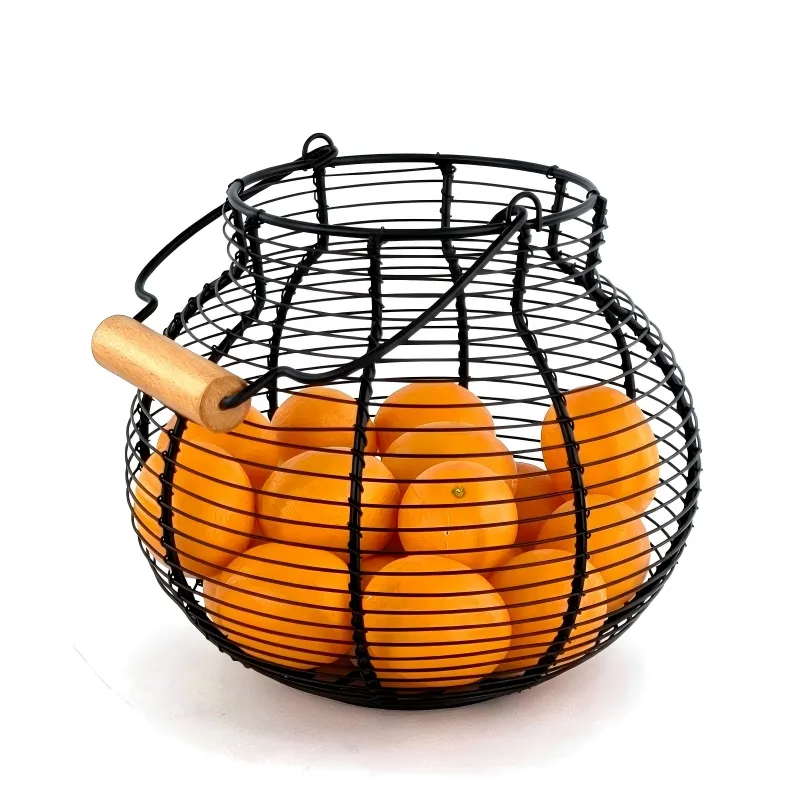
Before analyzing which is better, it’s necessary to clarify the structural differences between the two.
• Open mesh structure
• Excellent air circulation
• Easy moisture dissipation
• Typically used in room temperature environments
• More enclosed sides and bottom
• Limited air circulation
• Stronger moisture retention
• More suitable for refrigeration environments
The core difference between the two lies in their different approaches to balancing ventilation and moisture retention.
The answer is yes.
• Reducing local humidity
• Reducing moisture buildup
• Inhibiting mold growth
For fruits that continuously “breathe,” a well-ventilated environment can effectively reduce ethylene gas concentration, thus slowing down ripening.
Therefore, in room temperature environments, mesh fruit and vegetable storage baskets have a clear advantage.
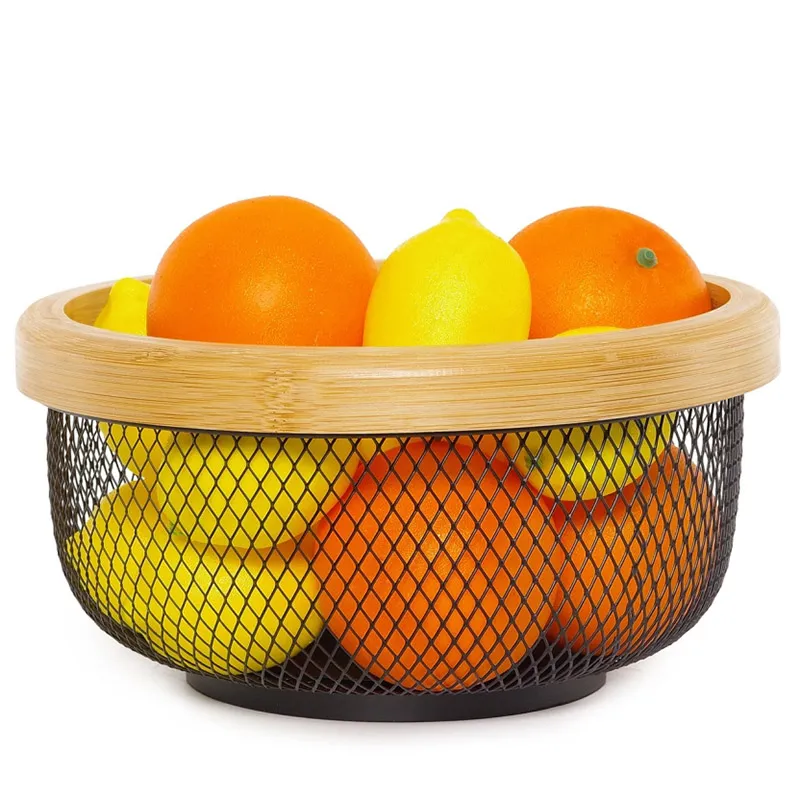
The core advantage of closed baskets is “moisture retention.”
• Leafy vegetables to soften
• Surface to dry out
• Reduced texture
• Reduce moisture evaporation
• Maintain internal humidity
• Slow down the dehydration process
Therefore, closed baskets are more suitable for storing vegetables with high water content in refrigerated or dry environments.
• Thick skin
• Less prone to water loss
• Require ventilation
Including:
• Apples
• Pears
• Oranges
• Lemons
• Pomegranates
These fruits maintain their condition well in open environments, and ventilation helps prevent rotting.
• Lettuce
• Spinach
• Bok choy
• Cilantro
• Celery
These vegetables lose water quickly in open environments, while enclosed fruit vegetable storage baskets help maintain humidity.
This is a crucial question.
• Low ambient humidity
• Direct airflow from air conditioning
• Long-term storage
Leafy vegetables, in particular, are prone to dehydration if placed in mesh fruit and vegetable storage baskets.
Therefore, mesh baskets are more suitable for fruits that can be stored for a long time, rather than high-moisture vegetables.
While the enclosed structure retains moisture, it also carries a risk—excessive humidity.
• Moisture cannot escape
• Condensation builds up
• Microbial growth accelerates
• Do not store damp, undried food
• Ventilate regularly
• Avoid prolonged sealing
Proper use can reduce the risk of mold.
• Low temperature
• High humidity
• Limited airflow
In this environment:
✔ Closed fruit and vegetable storage baskets are more suitable for leafy vegetables
✔ Mesh fruit and vegetable storage baskets are suitable for fruits that store well
Therefore, in a refrigerator, both types can be used together, rather than choosing only one.
Room Temperature Countertop Storage
• Mesh Fruit and Vegetable Basket Recommended
• Better ventilation
Refrigerator Storage
• Closed Fruit and Vegetable Basket Recommended
• Better moisture retention
Mixed Use
• Mesh Basket for Fruits
• Closed Basket for Vegetables
This combination maximizes storage efficiency.
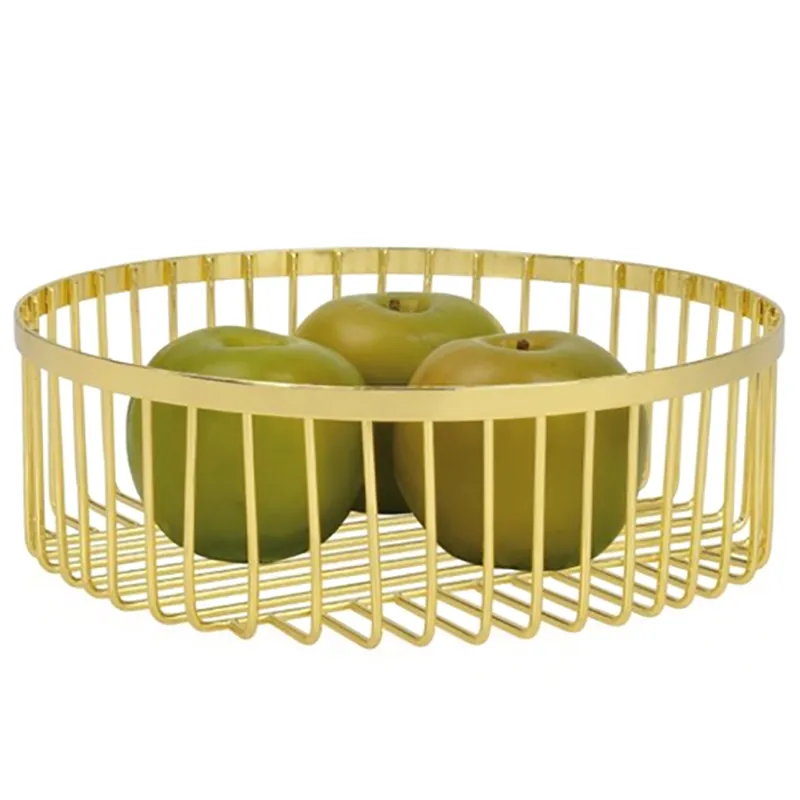
✔ Mesh baskets are better for fruits with high ventilation requirements.
✔ Closed baskets are better for vegetables with high moisture retention requirements.
✔ Closed baskets are more suitable for refrigerator environments.
✔ Mesh baskets are better for room temperature environments.
Therefore, there is no absolutely better type; the key is the usage scenario and the type of food.
Yes, our Factory implements thorough internal testing procedures to ensure structural safety and coating durability. Every Dish Rack, Mug Tree, Trivet, and Trolley is inspected before shipment. As a certified China Manufacturer, our Company follows ISO9001 guidelines to maintain consistent high quality standards.
Buyers who Buy from us can confidently distribute products in Wholesale and Retail channels with assurance of reliability and compliance.